
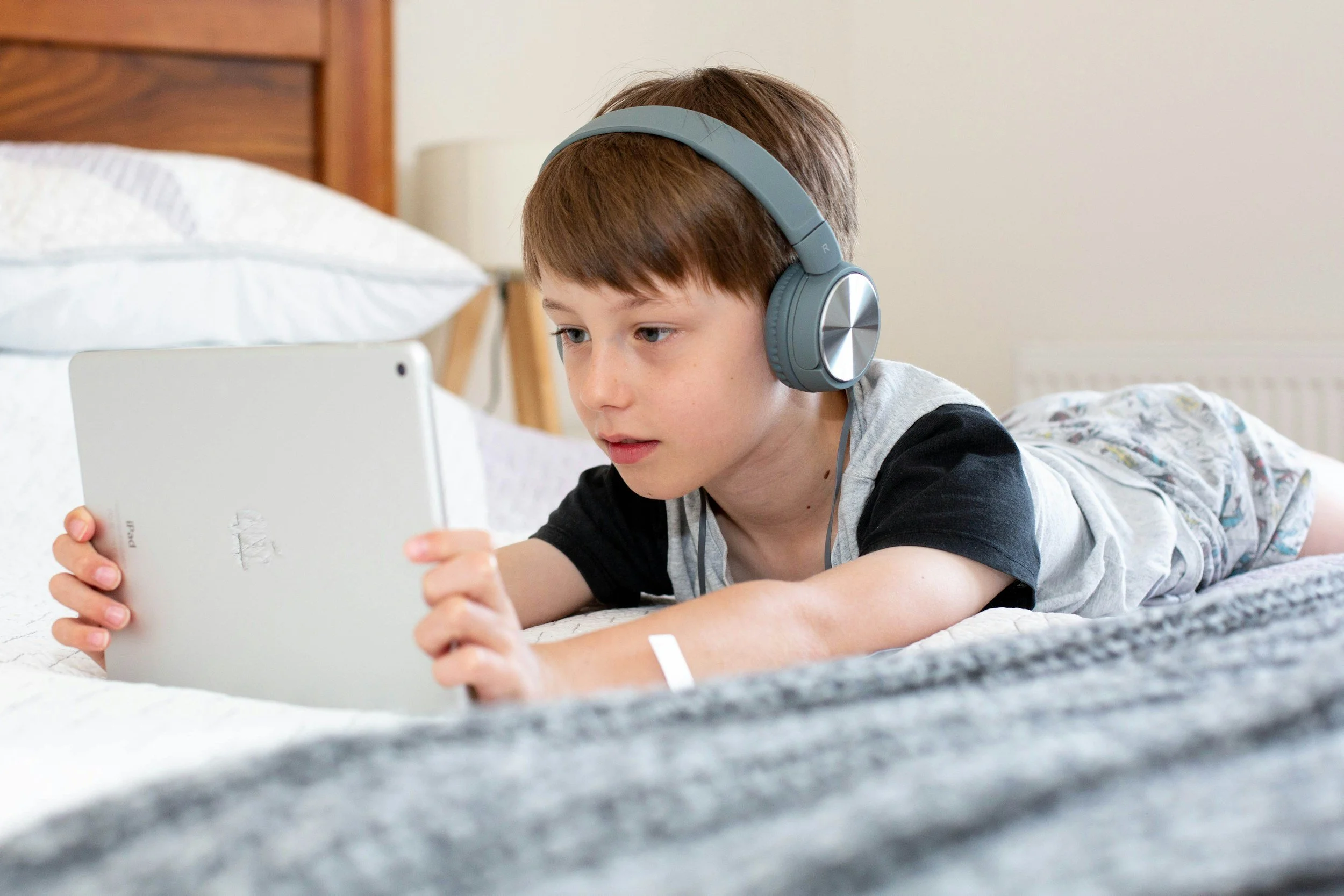
Is Duolingo Enough for My Child?
What the research actually says about apps, fluency, and what works.
By Dr. Crystal Marull, Ph.D. · Lux Mundi Learning · July 2026 · 6 min read
I hear this question from parents every single week. Their child has a Duolingo streak going. They're earning gems, hitting daily goals, and genuinely excited about it. And the parents want to know: Is this actually teaching them Spanish?
It's the right question to ask. Duolingo is free, gamified, and fun. For a lot of kids, that's its appeal. But engagement and fluency are two very different things. After more than two decades studying how children and adults actually acquire second languages, I want to give you a real answer.
What Duolingo does well
Apps like Duolingo are not worthless. They're genuinely effective at one thing: building vocabulary recognition. If your child needs to remember that el perro means "the dog," a few rounds of flashcard-style exercises will work. Spaced repetition (showing you words at increasing intervals) is backed by solid research on memory retention.
For a complete beginner, a language app can also reduce the anxiety of hearing a new language for the first time. That psychological runway matters, especially for younger kids who are still building confidence.
Where apps fall short
The problem is that real language acquisition requires something no app can provide: authentic, real-time communication with another human being.
"Students reported improved language skills and cultural knowledge, and the ability to apply linguistic skills to real-life situations" — but only through interaction with native speakers, not through isolated digital exercises.
— Marull & Kumar (2020), TechTrends: Linking Research and Practice to Improve Learning
In my published research with the University of Florida, my co-author Swapna Kumar and I studied what actually moved the needle for online Spanish learners. The answer was consistent. It was the live, telecollaborative sessions with native speakers — not the asynchronous exercises or vocabulary drills — that produced real gains in both language ability and cultural understanding.
Apps simulate language. They don't create the spontaneous, unpredictable back-and-forth that trains a child's brain to think in Spanish. When your child asks Duolingo "where is the train station?" Duolingo always answers the same way. A real conversation doesn't work like that. And a child's brain knows the difference.
What the research actually shows
Second language acquisition research is clear on this. My academic work on morphosyntactic processing (how learners' brains handle grammar in real time) shows that true fluency requires exposure to language patterns in authentic contexts, not just pattern-matching in controlled exercises. The brain needs to anticipate, predict, and respond to language the way native speakers do. That ability only develops through real interaction.
This is why the methodology we use at Lux Mundi Learning, licensed from the University of Florida, puts conversational fluency at the center of everything. Every lesson is designed around communication, not memorization. Grammar is taught in context, the way children actually absorb it, not as a list of rules to drill and test.
What about kids who love their app?
I hear this from parents often. My answer is always the same: loving an app is great. Use it as a supplement. Let your child build their streak, collect their gems, and feel good about learning words. Just don't mistake the streak for progress toward fluency.
The clearest sign that an app isn't enough? Ask your child to have a spontaneous conversation about something they care about. Their favorite sport, a funny thing that happened at school, what they want for their birthday. If they freeze or reach for words and can't find them, the app has taught them to recognize Spanish. It hasn't taught them to speak it.
So what should parents do?
Here's what I tell every family I work with.
First, decide what your goal is. If your child just wants to read a menu someday, a language app might be perfectly sufficient. But if you want your child to actually speak Spanish, to hold a real conversation, to connect with Spanish-speaking family or friends, to carry bilingualism as a lifelong skill, they need real instruction with real human interaction at the core.
Second, start early. The research on age of acquisition is consistent: younger learners develop more native-like pronunciation and intuitive grammar, especially when they're learning in a communicative, culturally rich environment. Waiting until high school is not the end of the world, but the earlier you start, the more natural it becomes.
Third, look for programs that prioritize speaking over testing. A good Spanish program should have your child speaking from the very first session, not waiting until they've "learned enough grammar" to open their mouth. Language is communication. It should feel that way from day one.
The bottom line
Duolingo is a good warm-up. It is not a Spanish education.
If you want your child to genuinely speak Spanish, to carry that language into their adult life, to connect with a culture, to have a skill that opens doors, they need more than an app. They need a teacher, real conversations, and a methodology grounded in how the brain actually acquires language.
That's exactly what we built Lux Mundi Learning to provide.
Wondering if your child is ready for real Spanish instruction?
Book a free 15-minute consultation and we'll talk through your child's goals, current level, and the best path forward. No commitment — just a conversation.